Adidas
Fixing a personalisation feature nobody understood
Year
2020
Timeline
6 months
Category
Ecommerce
Role
UX designer
Problem statement
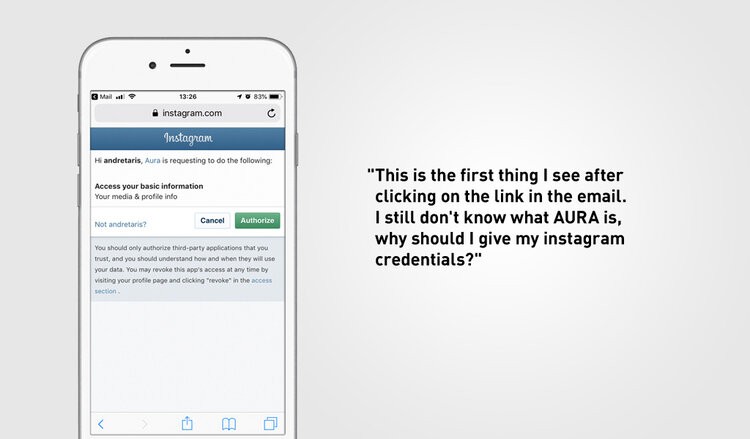
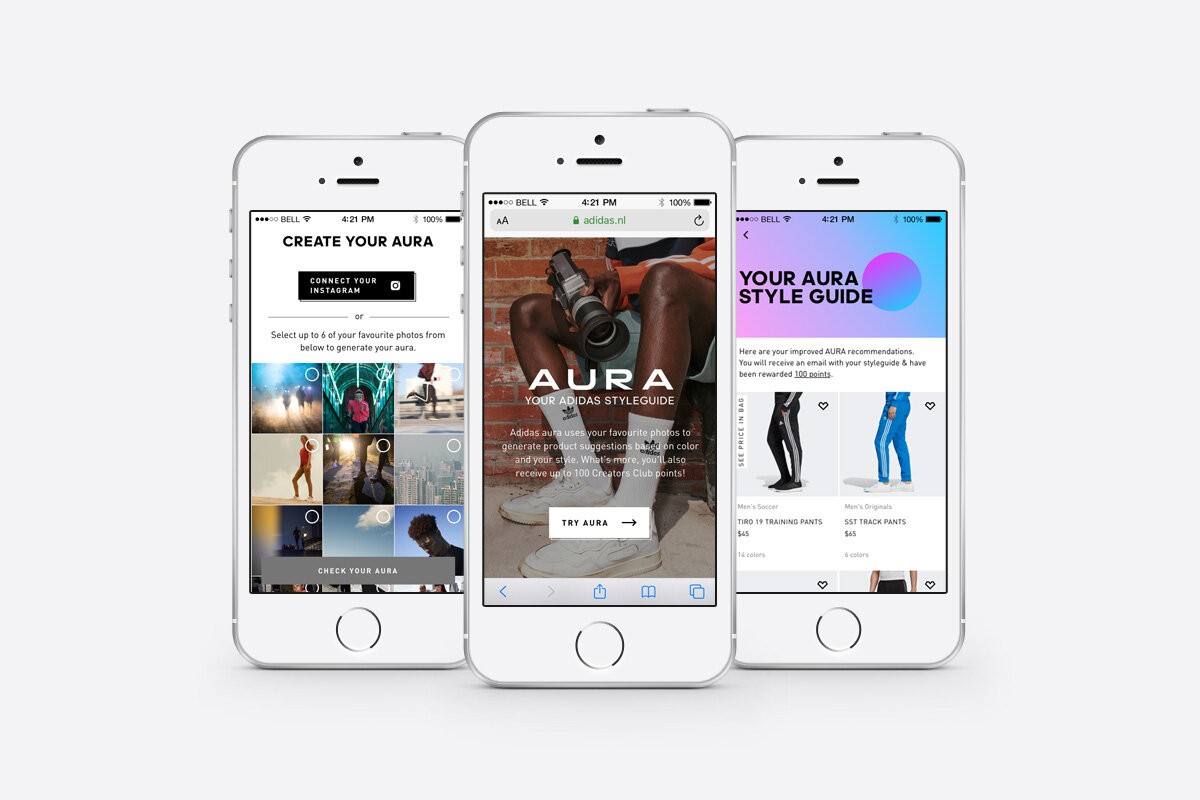
AURA launched in the US as a pilot feature linking users' Instagram accounts to their Adidas profile — but it was underperforming with a profile completion rate of just 24.8% and high early drop off. The feature existed, but users didn't understand why they should care about it.
Approach
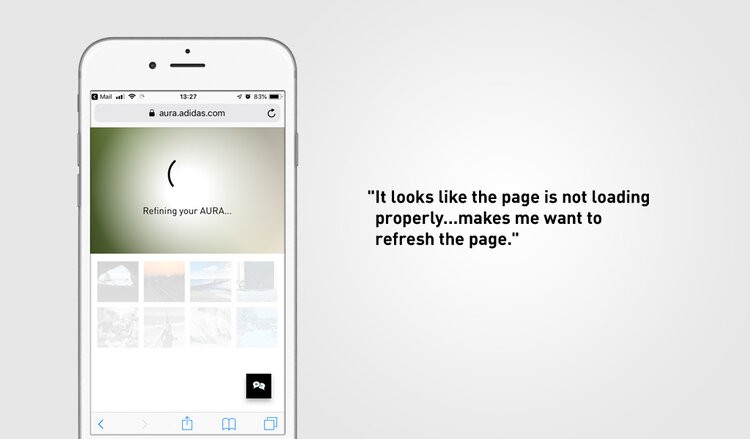
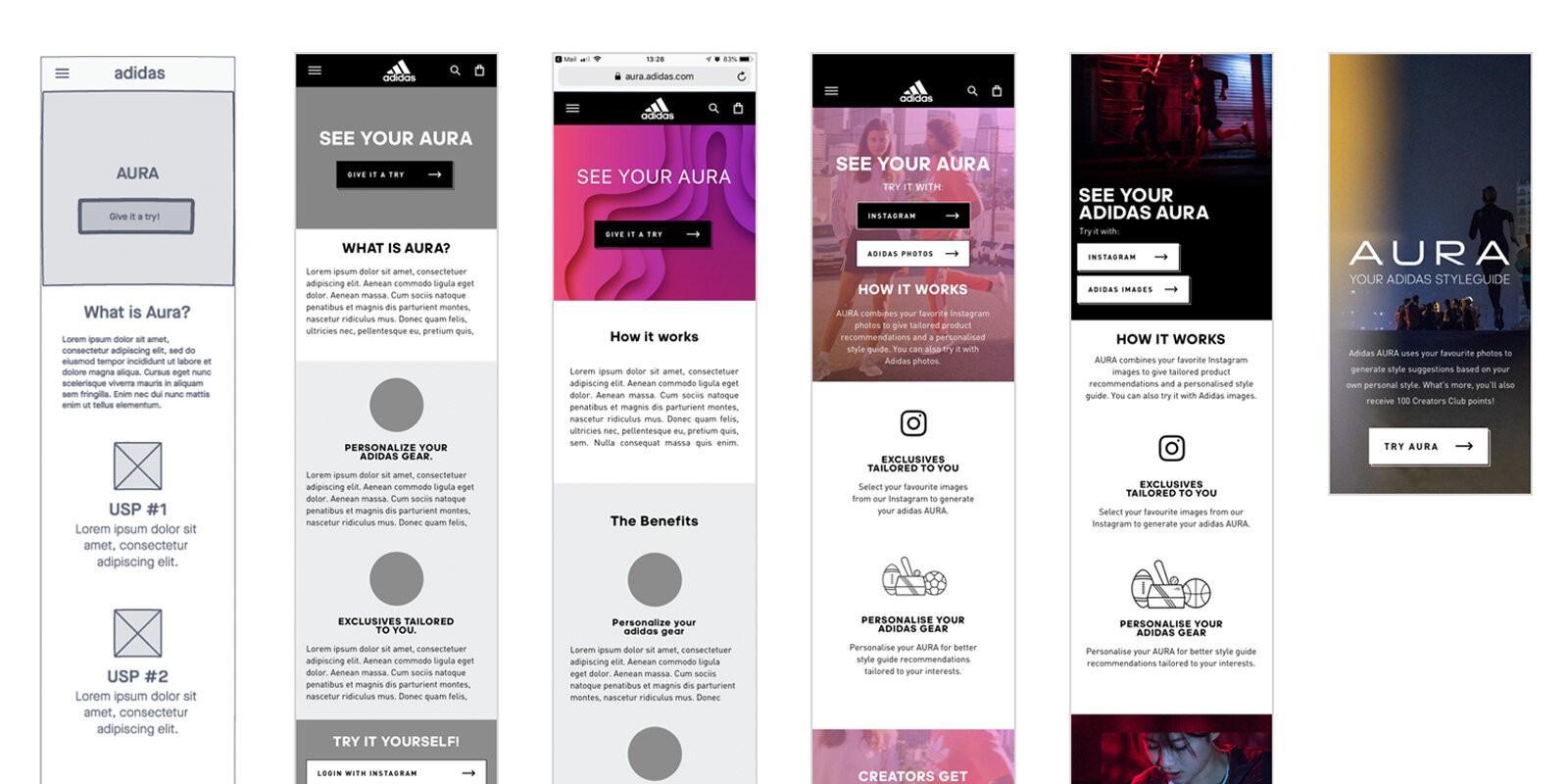
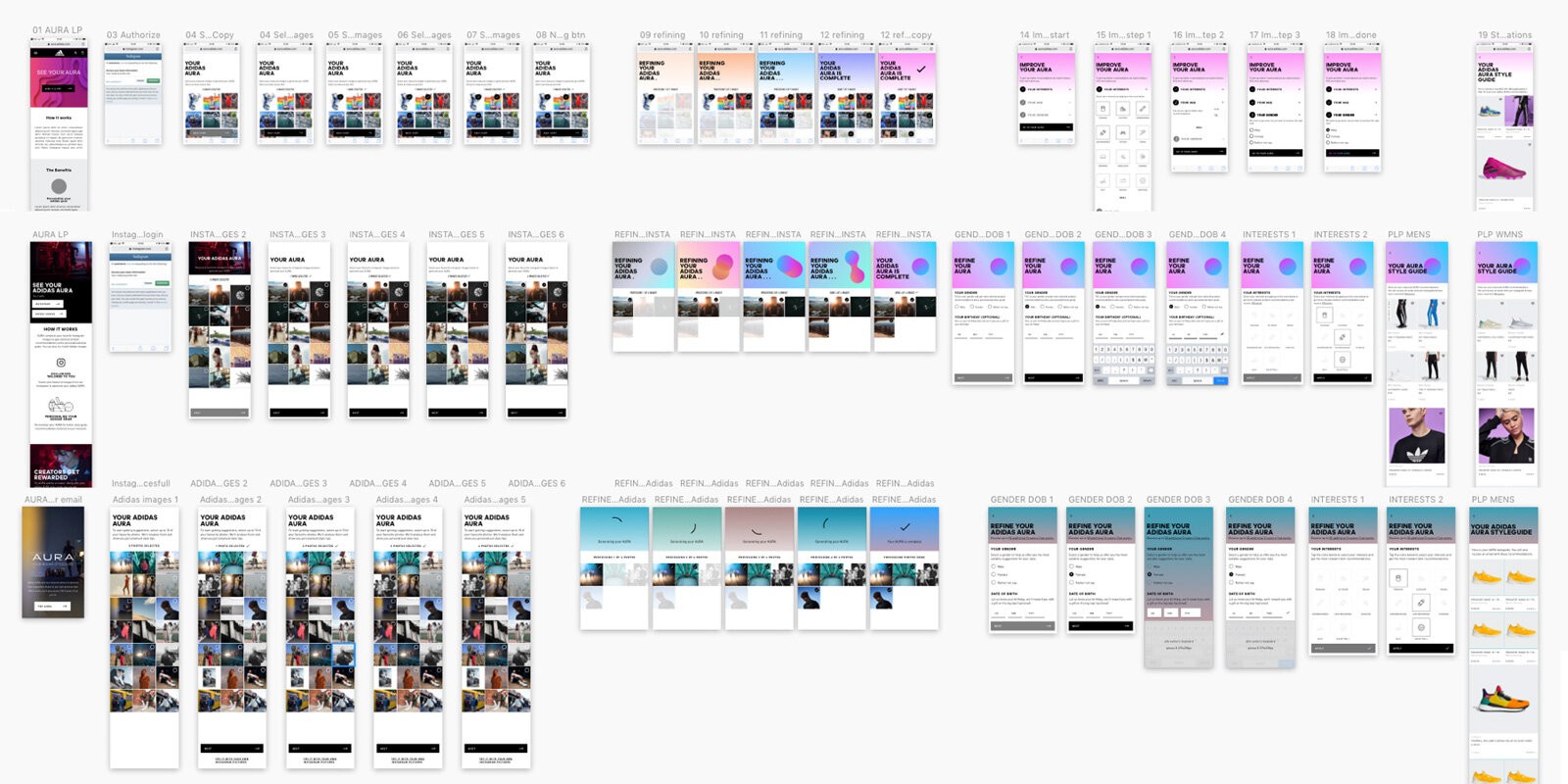
As UX Designer I owned the research, redesign, and stakeholder presentation. I worked closely with the Adidas product team to identify the root causes of underperformance and design a revised experience ready for scaled rollout. I opened with a mixed methods discovery phase: surveys revealed that users had no clear understanding of what AURA was or what value it would give them, while analytics pinpointed the exact screens where drop-off was highest. Visual and technical glitches on entry screens were creating an immediate trust problem. In the define phase I isolated these as the critical pain points to solve. With the problem defined I redesigned the user flow to let people explore AURA before committing to the Instagram integration — removing the mandatory gate that was causing most of the abandonment. I introduced a landing page that explained the feature's value proposition upfront, and ran A/B tests to find the optimal placement for the enrichment steps. In the deliver phase I built and tested prototypes with US users aged 18–35, focusing on satisfaction with the recommendation experience and willingness to share personal data.
Results
Redesigned prototypes achieved an average user satisfaction rating of 4.5 out of 5 in testing. Users responded positively to the personalised product recommendation experience. Based on the results, Adidas stakeholders approved a broader rollout of the updated AURA feature across the US market in Q3 2020.
Conclusion
When a feature has a value exchange — give us your data, get personalisation in return — the burden of proof is on the product to explain that trade-off clearly before asking for anything. Removing friction isn't always about fewer steps; sometimes it's about better framing.